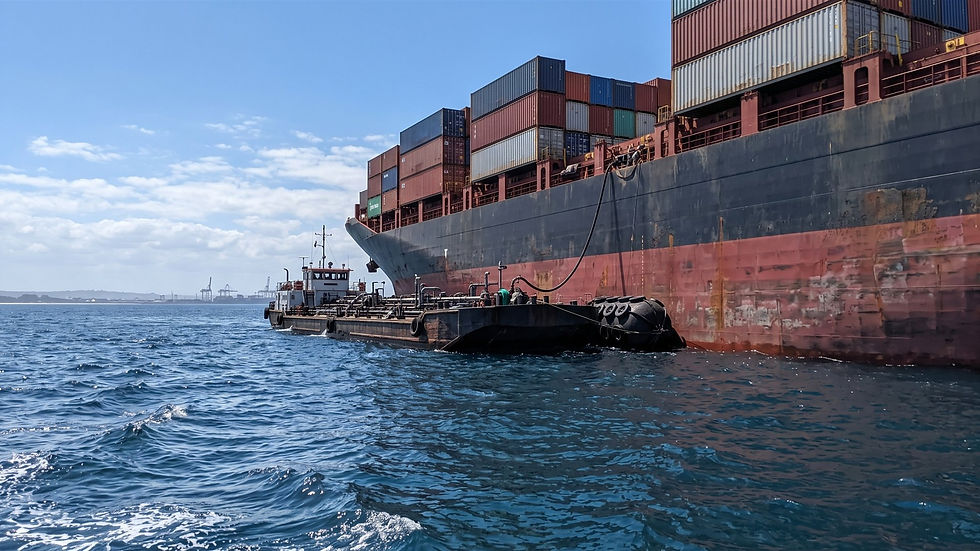
Durban port congestion: what importers should plan for in October 2026
Durban handles over 60% of South Africa’s container traffic, making it the country’s most critical gateway for imports. While quayside operations have improved, vessel delays and slow inland container movements continue to pose significant challenges. Daily container movements at the Durban Gateway Terminal (DGT) have returned to normal levels; however, transporters still face prolonged waiting times for collection. According to the Southern African Association of Freight Forwarders (SAAFF), supply chains are absorbing 18–20 days of additional delays. Importers moving cargo through Durban this month should prepare for extended collection times and higher charges linked to storage and demurrage.
System changeover triggers backlog
The current backlog began in mid‑August 2026, when the Durban Gateway Terminal (DGT, Pier 2) transitioned to a new terminal operating system. The changeover was scheduled to take just 12 hours, but cargo handling remained slow for more than a month.
Between 14 August and 10 September, DGT processed an average of 3,672 twenty‑foot equivalent units (TEUs) per day, compared with 5,286 TEUs per day over the previous four months—a drop of roughly 30%. During this period, vessels waited an average of 212 hours at anchorage, nearly nine days before reaching a berth.
By contrast, Pier 1 was far less affected. It operated at 97% of its target throughput, with vessels waiting an average of 51 hours before berthing.
Quayside Recovery, Landside Bottlenecks
By 25 September 2026, the Durban Gateway Terminal (DGT, Pier 2) reported between 7,000 and 7,500 container moves per day, in line with its normal operating targets. However, congestion has not fully eased: ten vessels remained at anchorage, and by early October, average vessel delays at Pier 2 were still 10–18 days, with some extending to 21 days. Pier 1 continued to face 7–10-day delays.
The bottleneck has shifted to the landside. Trucks are spending between 4 and 22 hours at the terminal even with valid bookings, while securing a booking can take 1–2 days. This landside congestion is preventing supply chains from catching up, as full-speed terminal operations mean little if cargo cannot exit efficiently by road or rail.

The price of port congestion
Port delays quickly translate into added charges for cargo owners. The main ones are:
Demurrage – charged by shipping lines when a full container remains at the terminal beyond its free days.
Detention – charged when a container is kept beyond the agreed time before the empty is returned.
Congestion fees – several shipping lines introduced these at DGT in October 2026, with Freight News reporting on 5 October 2026 that they reach up to USD 500 per container.
While DGT has waived its own storage fees where delays are beyond the customer’s control, shipping line charges remain separate. As these are billed in US dollars, their rand cost fluctuates with the exchange rate.
Practical measures to reduce impact
Importers can take the following steps to mitigate the impact of Durban’s congestion:
Lodge customs entries early – prepare and submit entries before the vessel arrives so clearance does not become a bottleneck factor.
Book transport in advance – secure trucking slots as early as possible and confirm with your transporter before the vessel berths.
Check free days with shipping lines – confirm how many free days you have before arrival, and request extensions where delays are caused by the terminal.
Monitor carrier schedules – ask your forwarder whether your shipping line has changed port rotations or diverted cargo. By 10 September, about 11,550 containers had already been diverted, and carriers continue to omit Durban in October.
Build in buffer time – adjust delivery dates to customers by adding two to three weeks of lead time, reflecting current delays.
Plan for trucking delays – factor in 1–2 extra days for booking slots and up to 22 hours for truck turnaround.
Budget for added costs – storage and demurrage charges are rising due to revised DGT storage rules effective 1 October 2026.
Engage logistics partners – work with freight forwarders to manage inland trucking and storage efficiently.
Plan your shipment with confidence.
Durban’s congestion continues to challenge importers, but proactive planning and the right partnerships can make the difference. SAFS Trading works alongside cargo owners to secure trucking slots, negotiate free‑time extensions, monitor carrier schedules and plan realistic delivery timelines to manage customer expectations. If your business needs tailored solutions to manage delays, costs, and diversions, contact our team for expert support in safeguarding your imports.
Editorial note
This post reflects conditions at the Durban port in early October 2026. SAFS Trading will continue to monitor developments closely and publish updates as port operations change.